A Guide to Gothic Gardening
Gothic gardening is a unique and captivating way to express your love for the darker side of nature. It combines the beauty of plants with the allure of the mysterious and the macabre. If you have a passion for all things gothic, why not bring that aesthetic into your garden, or into your home with unique and dark plants? Personally, I also love to mix laziness into everything I do (but, call it 'efficiency, thank you), so I try to keep my beauties manageable - I want things that thrive with neglect.
This gardening style often features dark, moody or just unusual colors, unusual plant shapes, and a sense of mystery, although contrast is also key - if all of your plants are dark, you'll need contrasting pops of color (or planters) to help them stand out. You need dramatic detail, dark grave beauties and also haunting highlights to avoid vague ubiquitous darkness.
Color Palette: Dark purples, deep reds, and blacks are common in gothic gardens. These colors evoke a sense of drama and intrigue.
Plant Selection: Choose plants that have an unusual appearance or a rich history. Some of my favorites may not be black but have interesting names (like Alocasia Infernalis, or Hellish Alocasia)
Design Elements: Incorporate elements like black or unique planters indoors, stone statues, wrought iron fences, and dark pathways to enhance the gothic feel.
Know Your Crypt: Outdoors, make sure to learn your agricultural zone and soil type (acidic or alkaline, rocky, loamy, sandy or rich). Indoors, you may need to augment your space with additional lighting or for higher humidity. Knowing what you have to work with, and then the amount of work you're willing to put in every day (and being realistic about it) can help you to avoid spending on plants that may just die - although filling a house with dead plants is just about as goth as it can get, that's not exactly the idea here.
Summon your Specimens
Selecting the right plants is crucial. Below are some of our favorites, organized by type (indoor and outdoor), with a focus on those that are easy to care for. The only thing better than a stunning specimen is an easy piece.
Indoor Foliage and Flowers:
Black Raven ZZ (Zamioculcas zamiifolia) - The foliage starts out a bright lime green, but then develops into a stunning purple-black. It is slow growing and does best in bright diffuse light, but it can handle low light so it is a great option for those without grow lights (or to goth up your office)

Alocasia Black Magic (Alocasia Infernalis) - Not only does this beauty have dark, large leafed foliage, the scientific name essentially means Hellish Alocasia! Although this requires higher humidity, there are a few easy ways to do this (spritzing occasionally, grouping closely with other plants, placing in a room with a humidifier, and placing it in a drainage dish with some pebbles and keeping a small amount of water in the bottom to raise the humidity immediately around the plant).
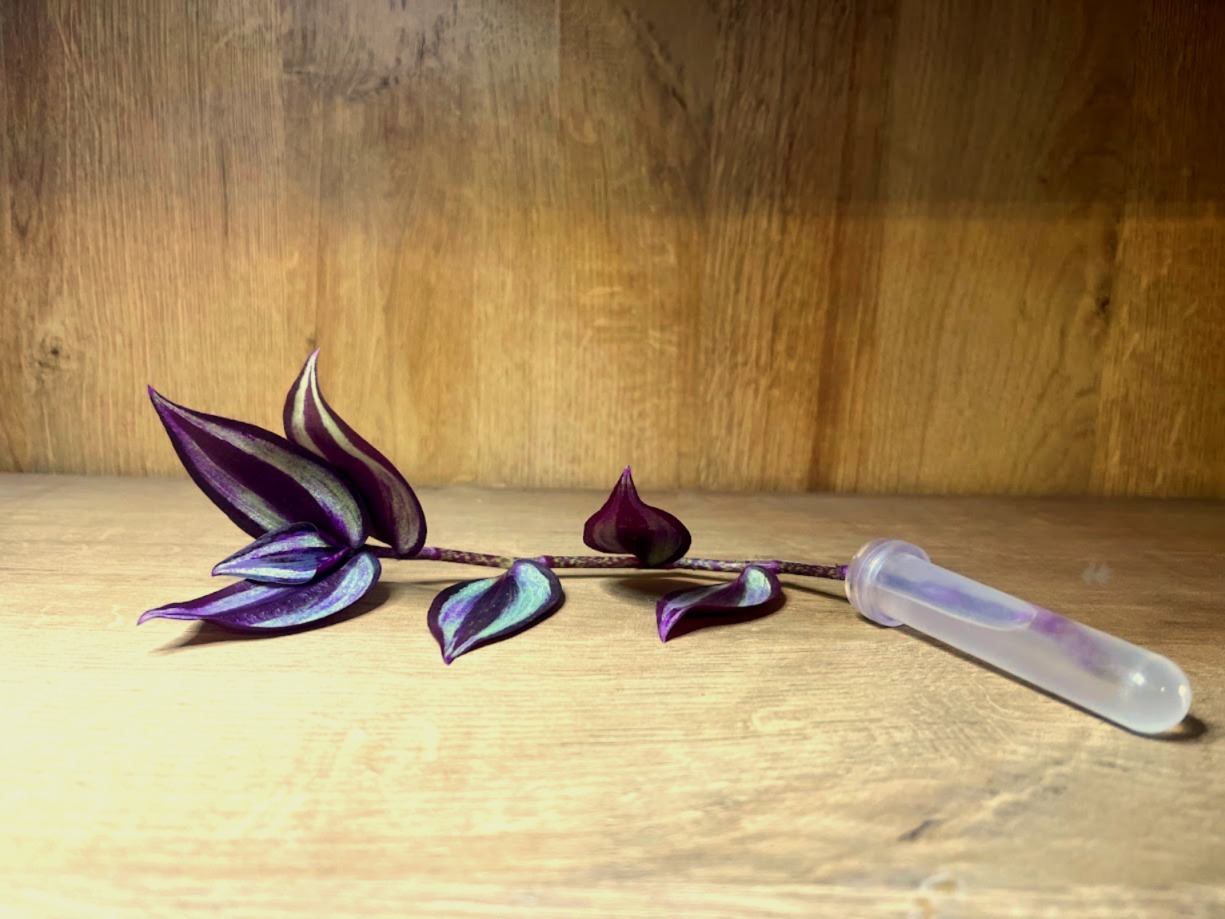
Silver Plus Burgundy Inch Plant (Tradescantia Zebrina): These are very tolerant to neglect - drought and flood tolerant, tolerant to low light (although they color will be most vibrant in bright light). Although they are not dark in the typical moody sense, they provide a beautiful splash of often much-needed color when surrounded by a gothic or macabre atmosphere and other dark plants. Find it here!

Purple Heart (Tradescantia Pallida) - These are very tolerant to neglect - drought and flood tolerant, tolerant to low light (although they color will be most vibrant in bright light). These are green and purple, and can get very dark purple in the right light - they provide both a dark centerpiece, and a beautiful splash of often much-needed color when surrounded by a gothic or macabre atmosphere and other dark plants. They will flower with small lavender flowers that close at night. Find it here!

Calathea Rosy Crimson (Calathea Roseopicta) - These provide a great contrast - the dark green and rose to crimson coloring on the interior of the foliage is a beautiful pop, particularly against a dark wall or within a grouping of dark foliage. Although this requires higher humidity, there are a few easy ways to do this (spritzing occasionally, grouping closely with other plants, placing in a room with a humidifier, and placing it in a drainage dish with some pebbles and keeping a small amount of water in the bottom to raise the humidity immediately around the plant).

Succulents:
Aeonium 'Black Rose' (Aeonium arboreum zwartkop) - In bright light or direct sun, the leaves are purple-black. In lower light, heads are green in the immediate center, and radiating outward they change to purple-red and then purple-black near the outside, so these are an amazing addition regardless of setting. Low humidity and watered every 7-10 days when the top couple of inches of soil are completely dry - very low maintenance, just don't forget!

Aeonium 'Chanel' - Dark green leaves with bright maroon near the edges, this is a colorful and unique variegated aeonium. Outdoors in warm climates it will be mostly green in the winter, while indoors it will maintain the burgundy color. Low humidity and watered every 7-10 days when the top couple of inches of soil are completely dry - very low maintenance, just don't forget!
Coral Cactus (Euphorbia Lactea Cristata) - With silver-grey body often tipped red, this cactus is easy to care for and provides an otherworldly and very unique addition to any succulent group or gothic garden. Water every three to four weeks (do not overwater) - again very low maintenance, the hardest part is not over-pampering it or forgetting!
Outdoor Foliage and Flowers:
Heuchera (Coral Bells): This plant comes in various colors, including deep purple and black. Its leaves add texture and interest.
Black Mondo Grass: This grass has a striking dark color and can be used as a ground cover or border plant.
Japanese Blood Grass: With its red-tipped blades, this grass adds a pop of color while maintaining a gothic aesthetic.
Black Roses: These stunning flowers symbolize mystery and elegance. They can be a striking focal point in your garden.
Purple Calla Lilies: With their unique shape and deep color, these flowers add a touch of drama.
'Dark and Handsome' Hellebore (Helleborus Hybrid): These bloom in late winter and early spring, providing early color in your garden. The leaves are dark green, and the flowers are a stunning dark purple with bright yellow stamen and poisonous to boot! These are part to full shade plants which can be hard to find in such rich color!
Black Hollyhock (Alcea Rosea) - Full sun, sturdy and tall 5-7 foot stalks will develop first, after which clusters of 3-4 inch blossoms will bloom, looking similar to hibiscus, in dark maroon to black hues. They are drought tolerant with a giant taproot and self-seeding, dropping seed pods from each of the flower heads in late fall so you will never need to plant again! These are great against a fence in the back of a flower bed to create a stunning wall of rich green with dark red to black flowers along the massive stalks.
Edible Gardening
Black Tomatoes - Varieties like 'Black Krim' or 'Black Cherry' taste great and bring some darkness to your vegetable garden.

Purple Cauliflower( Di Sicilia Violetto Purple Cauliflower) - These are absolutely incredible: within the green stalks and outer leaves, the cauliflower comes in a very rich purple, it looks unreal. Unlike some purple vegetables (like purple green beans), the color doesn't diminish but actually darkens when cooked. Sauté it in a little butter with some broccoli and you've got an amazing dish that is perfect Halloween colors of dark green and dark purple!

African Blue Basil (Ocimum kilimandscharicum × basilicum 'Dark Opal')- There are a number of purple basil plants, but this is our favorite because it is a perennial, can grow taller, and tolerate growth indoors better than most basil plants. The young leaves start out dark purple, and they turn green as they grow with purple veins.

Designing Your Gothic Garden
Once you have chosen your plants, it is time to design your garden. Here are some tips to create a gothic atmosphere:
Layout Ideas
Pet Parents: Whether indoor or outdoor, be cautious as there are many plants including very common ones which are toxic to dogs and cats. Cats are known for eating and destroying indoor plants, so consider getting them some cat grass to chew on, and keeping your other plants elevated, or sprinkle them with some cayenne pepper - they'll learn a quick lesson. Dogs may chew on plants both as a source of fiber and if they are bored, so those too you can sprinkle with pepper but if you've got a large space it can be difficult, so choose wisely to keep your animals safe!
Layering Plants: Use taller plants in the back and shorter ones in the front to create depth.
Outdoors - Curved Pathways: Instead of straight lines, opt for winding paths that create a sense of mystery.
Focal Points: Incorporate statues, birdbaths, or other decorative elements to draw the eye. Stone and stone-finished items like statues, planters, and gargoyles and wrought iron gates, trellises and arches can enhance a gothic garden well.
Lighting: Consider using lanterns or fairy lights to create a magical atmosphere in the evening.
Start Small
If you are new to gardening, start with a small area or one plant to focus on indoors. You can choose a few key plants that are easy to care for in a small bed or for a corner of your space and design elements to create a focal point.
Experiment and Evolve
Don’t be afraid to experiment. Gardening is a learning process, and your garden can and should evolve over time as your knowledge grows and you find your specific aesthetic.
Connect with Others
Join gardening clubs or online communities to share your passion and learn from others. Focus on those either local to your area, or that are gothic themed.
Or, join our Facebook group, Gothic Gardening where we provide regular tips, tricks, and community engagement for gothic gardens (with absolutely no AI allowed)


Comments