Purple Heart (Tradescantia pallida)
Updated: Feb 12
Why Gothic Gardeners Love It
Naturally dark, saturated foliage
Strong contrast against pale planters, stone, or bone-toned decor
Looks intentional even when running wild
Thrives on neglect (a virtue, not a flaw)
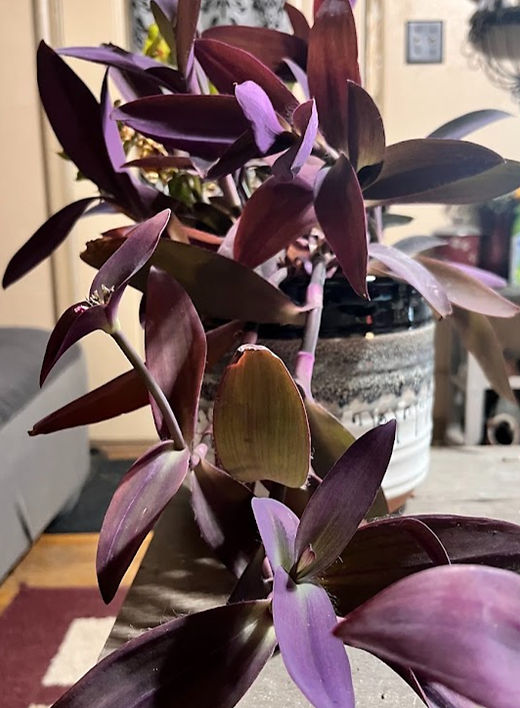
Why you need it:
Dark, dramatic, and nearly impossible to kill—Purple Hearts are a staple specimen for gothic gardeners and anyone who prefers their plants with a little edge. They offer wonderful contrast both to bright greens that are so common, and for those with a very gothic garden, they provide a wonderful pop of dramatic color against dark and black plants.
This plant is famously forgiving. Miss a watering? It survives. Forget about it for a week? It forgives you. It thrives in a wide range of conditions and grows quickly, making it ideal for beginners, collectors, and anyone building a low-maintenance but high-impact plant collection.
Elongated, lance-shaped leaves range from deep royal purple to dark green, with richer coloration developing in brighter light.
Small lavender flowers will appear when they mature and receive enough light, opening during the day and closing at night within a beautiful 'boat' of two leaves:

When allowed to trail or spread, Purple Hearts create a lush, shadowy cascade with many J-hooks, as the stems grow down and up again, perfect for indoor planters and often used for hanging planters. Regular trimming just past a leaf node will allow for a bushy powerhouse centerpiece - use clean scissors and make a clean snip just past one of the leaves as in the picture below (gloves are recommended because of their potentially irritating sap, this is 'do as I say not as I do moment, it doesn't irritate my skin at all but that's no guarantee):

Cautionary Tales and Common Questions:
They produce a beautiful purple sap which can be a mild irritant especially for those with sensitive skin, so gloves are suggested when handling and especially when pruning. You can see the beautiful sap here on someone's skin who was not following instructions (🙋♀️)

They are toxic to pets, so place them in your home with care. We have had success sprinkling our plants and the potters and dirt with hot pepper powder (cayenne, jalapeno etc), and our cat learned quickly that she hated sniffing the plants and would not chew them. Stay vigilant, though!
If your Purple Heart is turning green, never fear - they will survive in lower light, but you will see that they are greener. Their purple coloration (and amount of flowers) is richer in brighter light, so consider moving it to a sunny window or adding a grow light to get that deep purple color back.
Care & Growing Notes
Light: Bright indirect light to full sun (more light = deeper purple, more flowers, it may turn green if it doesn't get enough light)
Water: 2x/week when soil is dry when young; drought tolerant once established
Soil: Well-draining potting mix
Growth Habit: Trailing, spreading, and fast-growing
Difficulty: Extremely easy / beginner-friendly
Mature Size: 1ft tall and 1 ft wide
USDA Hardiness Zones: 9-10, but check your local area if you want to plant outdoors, as they are considered invasive in some warmer humid areas of the US like Florida!
Toxic to pets: Yes!
Fertilizer: Typically not necessary, but a general purpose fertilizer during the growth season late spring to mid-summer can be used
Deer Resistant: No
If you’re building a garden that favors shadows over sunshine and character over perfection, Purple Hearts belong in your crypt, cauldron, or windowsill. They're beautiful, independent, and mildly toxic like all of our favorite people 🖤


Comments